
Service Topic / CAPABILITY
T-MOM Manufacturing Operations Collaboration
Create an integrated operating loop across sales, planning, warehousing, production, quality, equipment, and energy so planning and execution can work as one.
- Key capability 01
- Planning is disconnected from shop-floor execution, so schedule changes are frequent and late.
- Key capability 02
- Order, material, capacity, and quality data are scattered, preventing a unified operating view.
- Key capability 03
- Exception closure depends on manual follow-up, creating high cross-functional coordination cost.
Scenario Challenges
Manufacturers operating at scale often run into the following issues:
- Planning is disconnected from shop-floor execution, so schedule changes are frequent and late.
- Order, material, capacity, and quality data are scattered, preventing a unified operating view.
- Exception closure depends on manual follow-up, creating high cross-functional coordination cost.
- Operating metrics are not consistently accumulated, so improvement actions lack quantified support.
Platform Positioning
T-MOM acts as the manufacturing operations hub, connecting the planning layer with the execution layer to form a plan-execute-feedback-optimize loop that supports the move from experience-driven operations to data-driven operations.
Business Domain Coverage
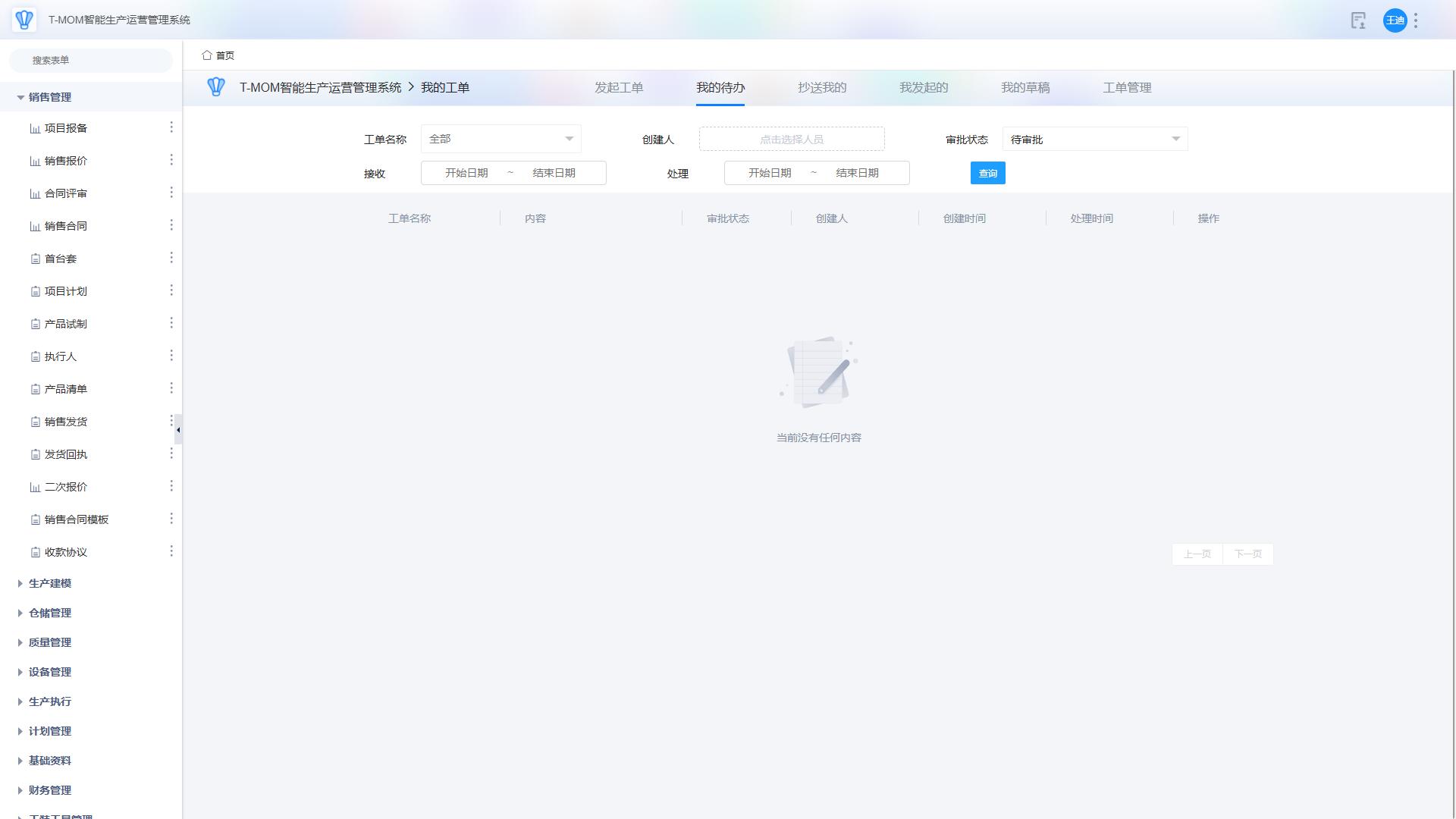
- Sales and orders: visibility into order progress, work in process, and delivery risk.
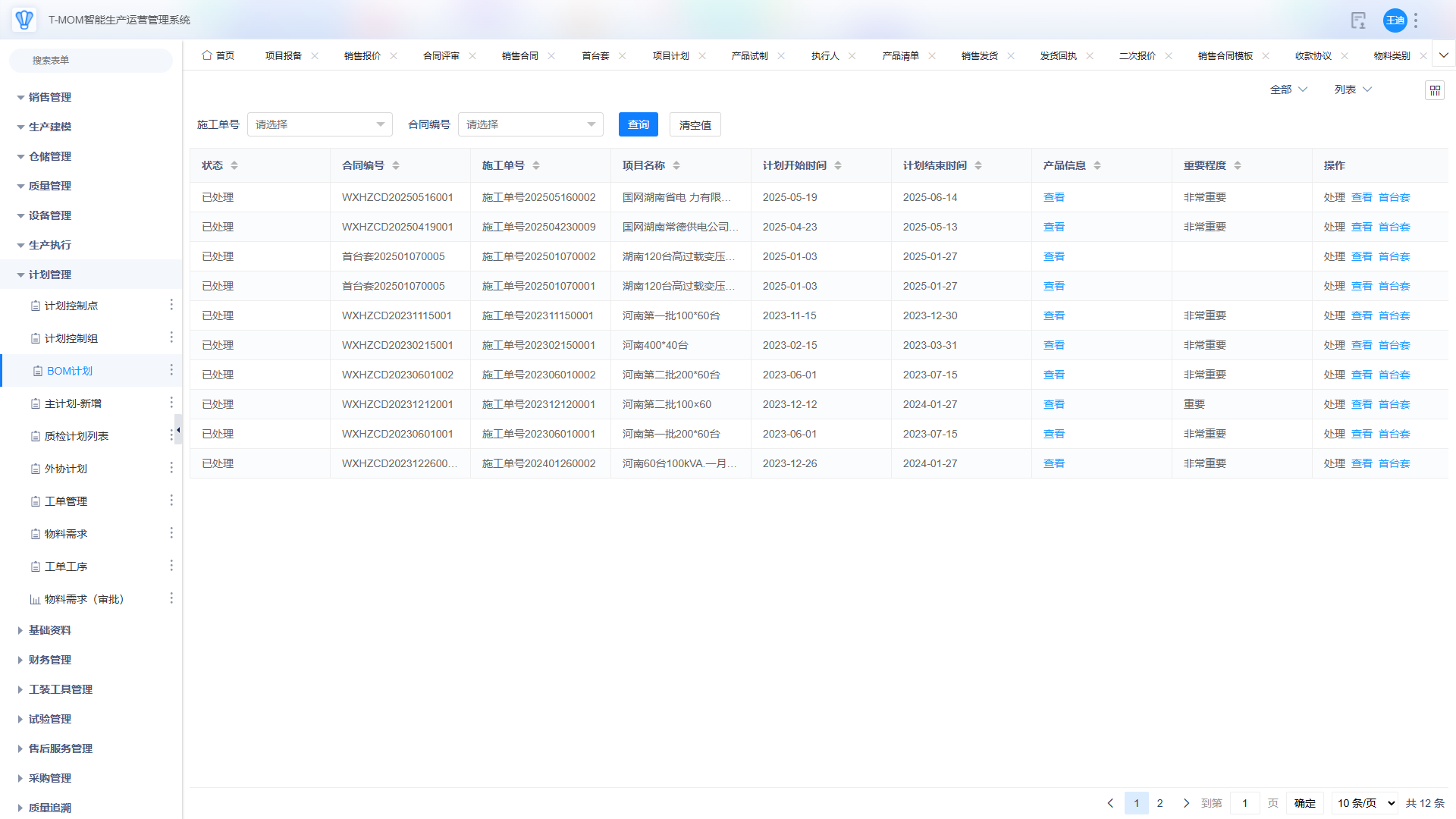
- Procurement and materials: MRP calculations, kitting checks, and inventory linkage.
- Planning and scheduling: rolling monthly, weekly, and daily plans with load analysis and dynamic scheduling.
- Shop-floor execution: work-order flow, terminal reporting, abnormality submission, and handling.
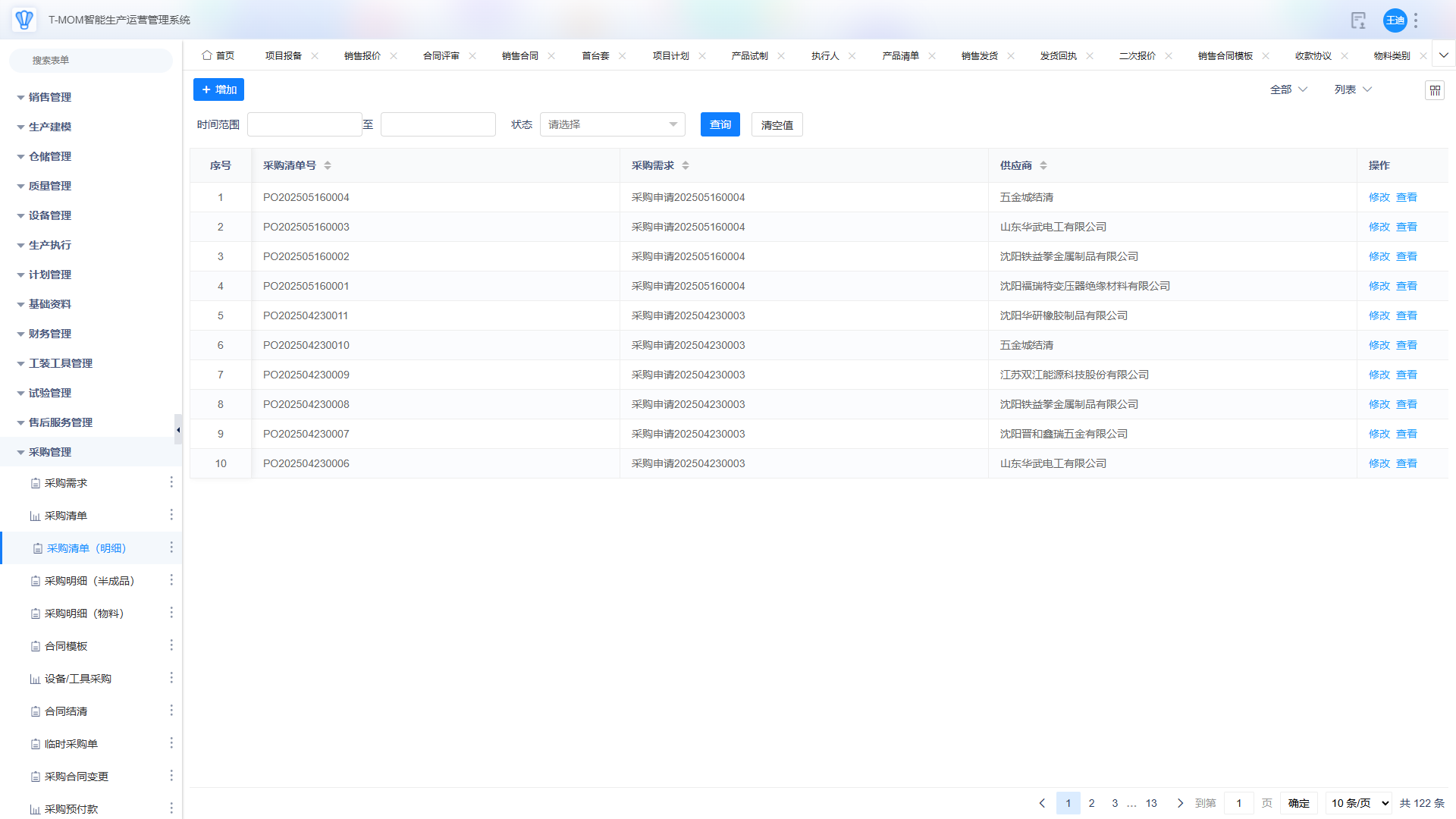
- Quality management: incoming, in-process, and final inspection plus traceability.
- Warehousing and equipment: inventory locations, inbound/outbound control, inspection and maintenance, and equipment performance.
- Energy management: utility data collection, energy-consumption analysis, and energy-saving tracking.
Typical Closed-Loop Process
- Sales orders trigger material and capacity evaluation.
- The system generates production, preparation, and procurement plans.
- Shop-floor execution feeds real-time status through terminals.
- Quality and equipment events trigger alerts and handling workflows.
- Dashboards and reports are used to review efficiency, quality, and cost.
Key Metrics
- Plan attainment and on-time order delivery rate.
- Material kitting rate and time lost in WIP stagnation.
- First-pass quality rate and exception closure speed.
- Equipment availability and overall operating efficiency.
Implementation Approach
- Start with a pilot: prioritize a high-value line or critical business domain.
- Expand step by step: replicate by module and organization to reduce switching risk.
- Optimize continuously: establish weekly and monthly review routines to refine processes and rules.
Business Value
- Stronger coordination between planning and execution, improving delivery certainty.
- Lower cross-functional communication and repeat coordination cost.
- A unified operational data foundation that supports ongoing lean improvement.
Quick Actions
Share your target outcome and we can propose a practical implementation roadmap.
Discuss project