Factory Topic / CAPABILITY
Production Equipment Overview
Focused on transformer coil winding equipment, this section covers high- and low-voltage coil processing capability across different product structures and the standardized way those operations are executed.
- Key capability 01
- Automatic winding machines are mainly used for high-voltage coil winding on stacked-core transformers.
- Key capability 02
- Horizontal winding machines are mainly used for low-voltage coil winding on stacked-core transformers.
- Key capability 03
- Silicon-steel 3D wound-core winding machines support both high- and low-voltage coil winding for three-dimensional wound-core transformers.
Equipment Configuration
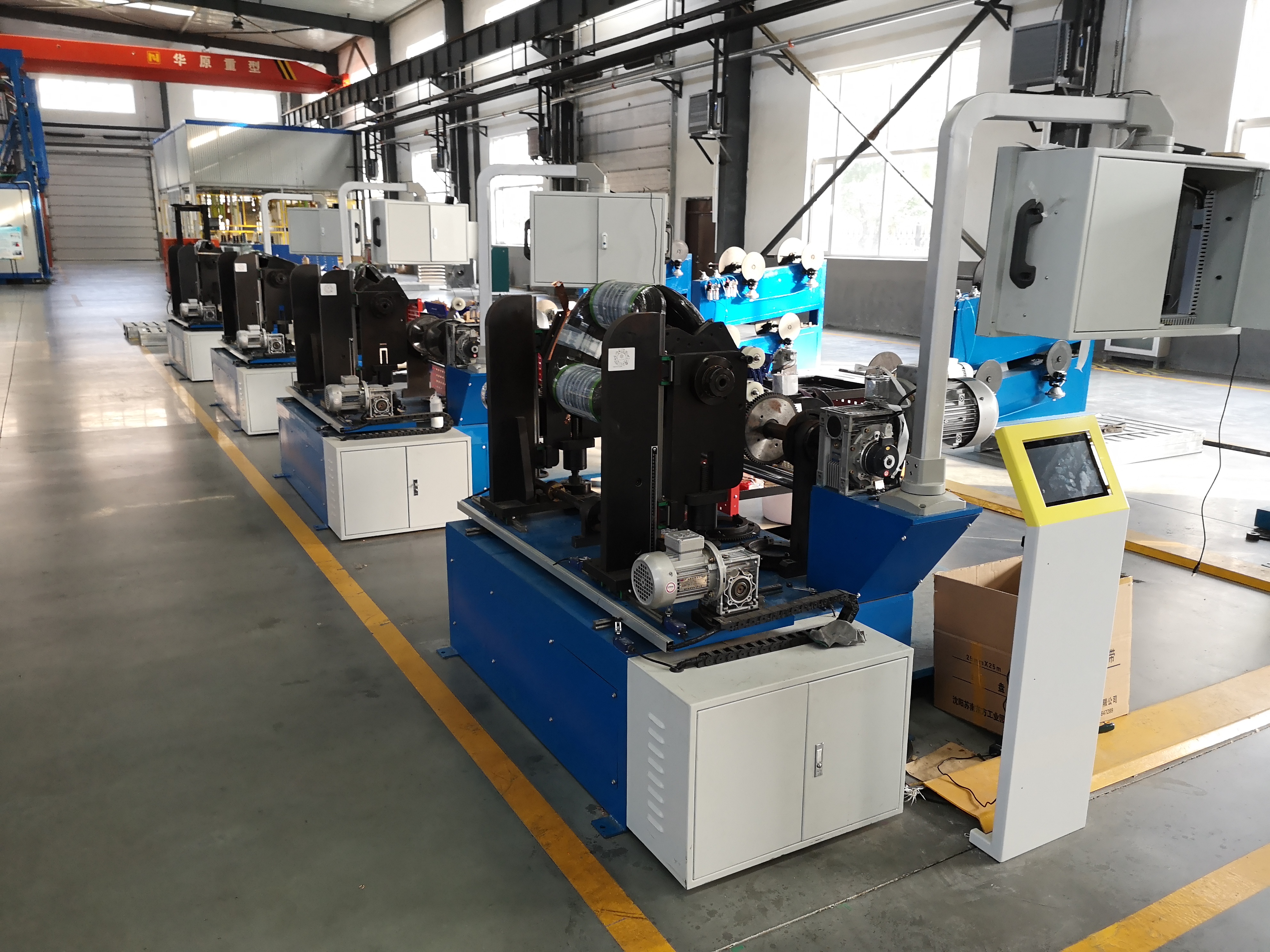
- Automatic winding machines are mainly used for high-voltage coil winding on stacked-core transformers.
- Horizontal winding machines are mainly used for low-voltage coil winding on stacked-core transformers.
- Silicon-steel 3D wound-core winding machines support both high- and low-voltage coil winding for three-dimensional wound-core transformers.
- Amorphous-alloy 3D wound-core winding machines support both high- and low-voltage coil winding for amorphous-alloy transformers.
- Each winding machine is paired with an all-in-one terminal so operators can review drawings, work instructions, process documents, and key control points on the touch screen. During production and inspection, test data can also be uploaded to the system to support a paperless workshop and quality traceability.
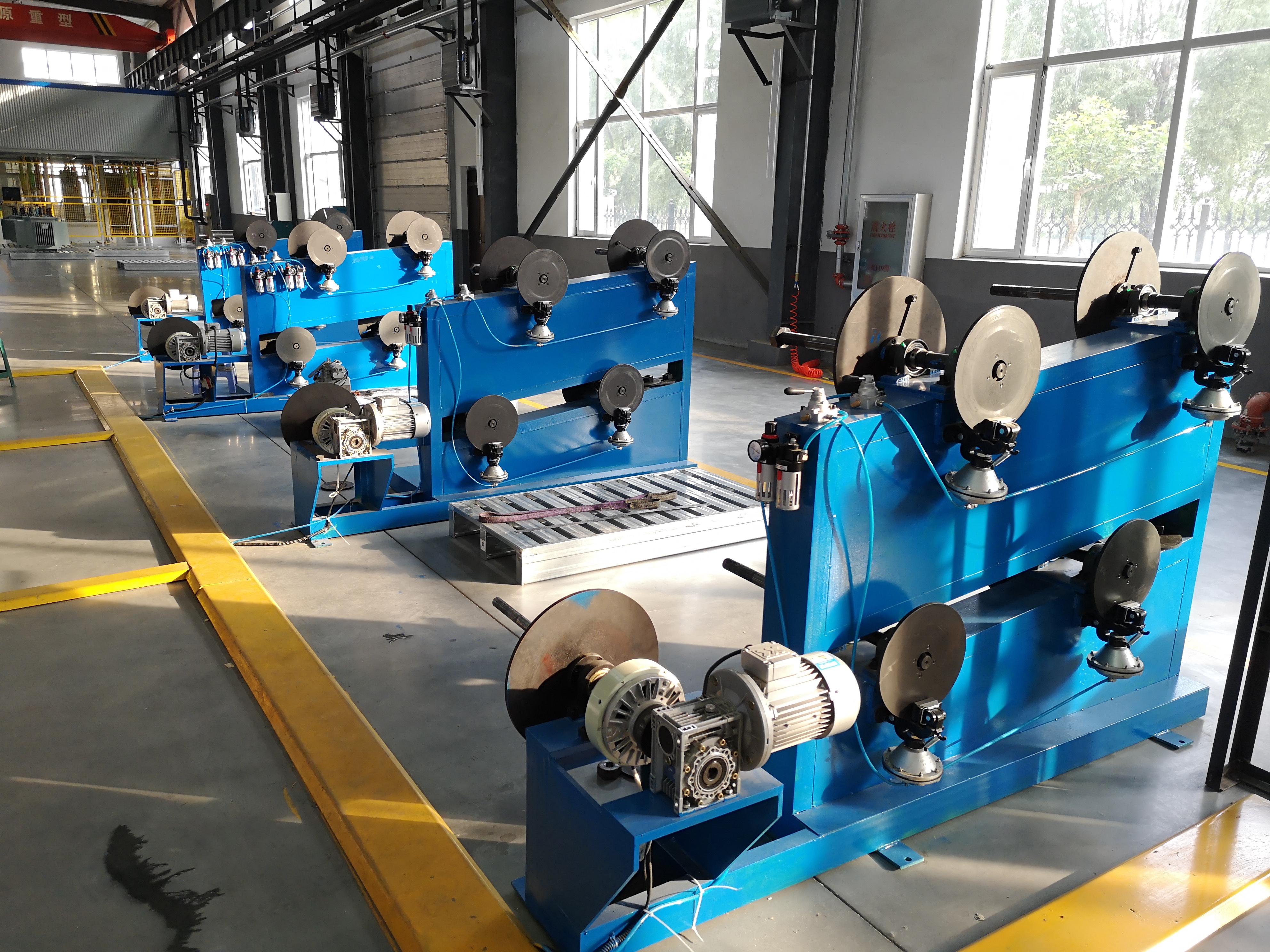
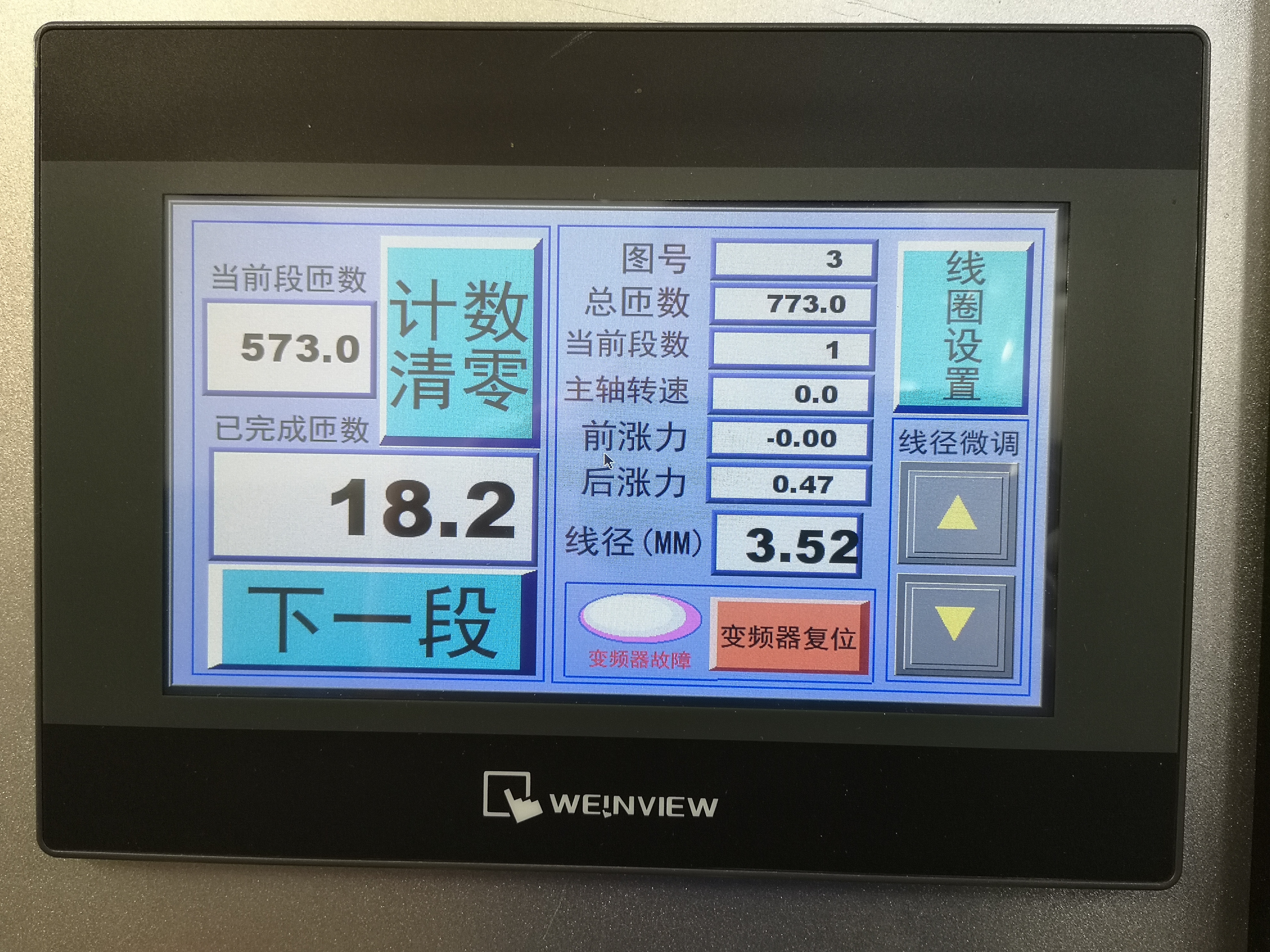
- The equipment includes pay-off, wire-guiding, tension-control, and counting units, forming a continuous station from conductor or foil unwinding through shaping and unloading, which helps unify process-parameter management and traceability.
- Fixtures are installed at critical stations to support fast changeover across different coil sizes, reducing preparation time and operator-induced setup deviation.
Operating Capability
- Supports changeover across different coil specifications, meeting the needs of parallel production for multiple product models.
- Combined with process-parameter control, it keeps winding dimensions, turns, and tension consistent.
- Standardized equipment configuration reduces the impact of operator-to-operator experience differences on product quality.
- Covers common high- and low-voltage coil winding tasks and supports recipe switching by product model, making it suitable for mixed-model scheduling and small-batch insertion orders.
- Coordinated control of turn counting, tension settings, and wire-guiding pitch stabilizes coil dimensions, winding density, and forming consistency.
- Supports different conductor specifications and insulation-layer combinations while following drawing requirements for layer treatment, end allowance, and lead direction control.
- Under standard work conditions, teams can operate more consistently with less dependence on individual experience, reducing quality fluctuation from "same machine, different operator."
- Provides an interface for first-piece confirmation after changeover, making first-article checks, parameter review, and batch release easier to execute on site.
- Connects smoothly with downstream assembly, drying, and testing, so coil handoff is more stable for later positioning and takt control.
On-Site Value
- Improves coil-winding efficiency and supports stable production of distribution transformers and combined substation equipment.
- Reduces fluctuation in critical operations and improves consistency in high- and low-voltage coil processing.
- Builds a stable manufacturing foundation for downstream assembly, drying, oil filling, and testing.
- Raises winding throughput while staying within quality boundaries, supporting continuous delivery for distribution transformers and related assemblies.
- Reduces rework caused by dimensional deviation, uneven end treatment, and other common coil-quality problems through parameter standardization and fixture application.
- Lowers single-point dependence on highly experienced operators, helping new employees ramp up faster and making team execution more stable.
- Increases scheduling flexibility across different order mixes, so regular models and urgent insert orders can switch on the same line in a controlled way.
- Provides more consistent incoming quality for core assembly, body drying, oil filling, and routine testing, reducing abnormality transfer across operations.
- From a shop-floor management perspective, it helps build a coil-manufacturing process that is reviewable, traceable, and continuously optimizable.